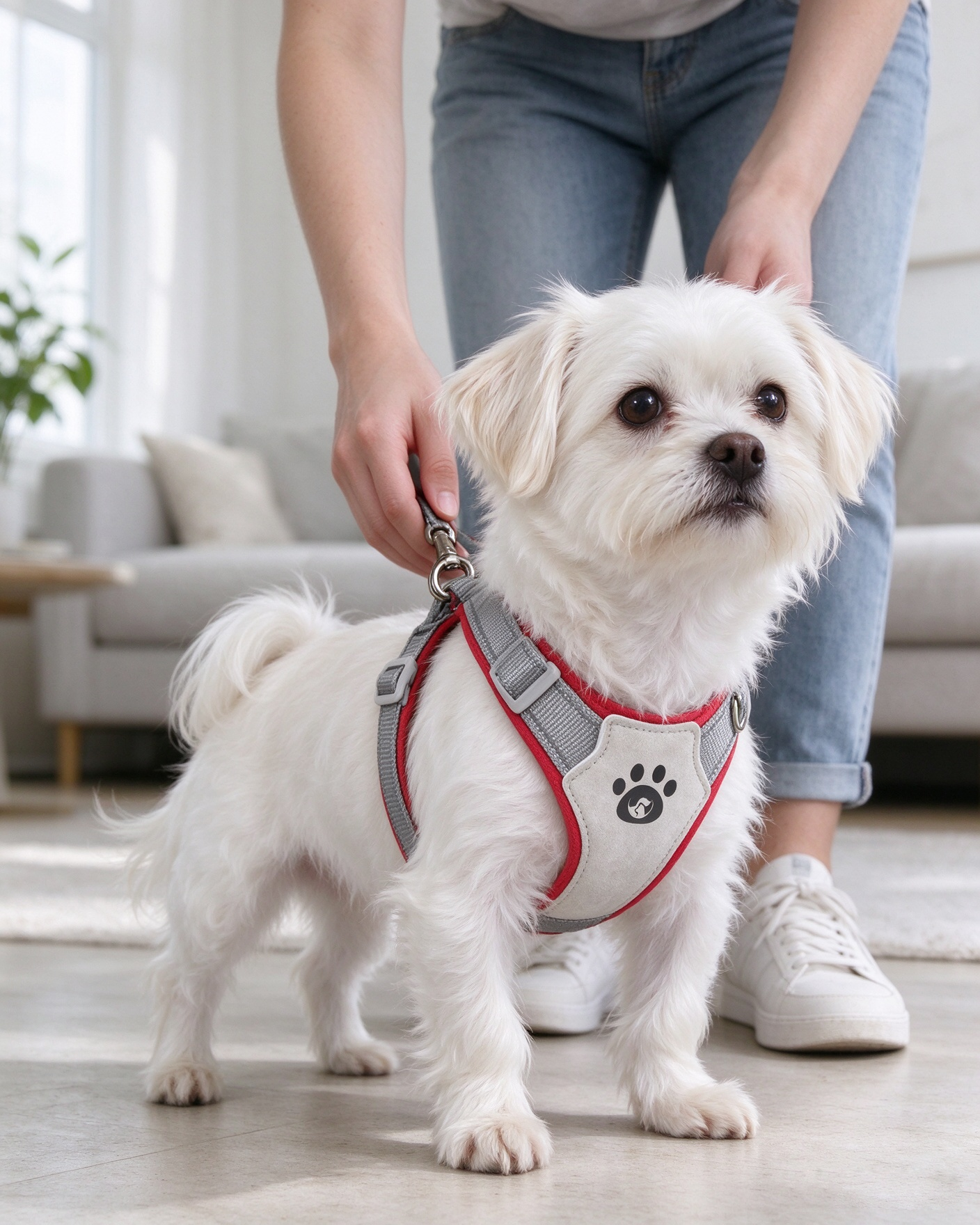
Buying a dog harness online can feel like a gamble. If it’s too loose, your dog might slip out. If it’s too tight, it will rub and cause discomfort. Unlike collars, which just go around the neck, a harness distributes pressure across the chest, meaning getting the exact measurements right is crucial.
Here is the simple 2-step guide to getting a perfect fit for a step-in harness.
1. Measure the Chest Girth (The most important step)
The chest girth is the measurement around the widest part of your dog's ribcage, usually right behind the front legs.
- Use a soft measuring tape: If you don't have one, use a piece of string and then measure the string with a ruler.
- Wrap it around: Go around the deepest part of the chest. Make sure the tape is snug but not pulling tight.
- The Two-Finger Rule: You should be able to comfortably fit two fingers between the tape and your dog's fur.
2. Measure the Neck (Optional, but helpful)
While step-in harnesses don't rely heavily on neck size, it helps to know it. Measure the base of the neck where a collar would naturally sit.
Why Step-In Harnesses Are Better
Traditional overhead harnesses require you to slip the loop over your dog's head. For many dogs, this is scary and stressful. Our No-Pull Harness uses a step-in design: your dog simply steps into the two leg holes, and you clip it on their back. It's fast, stress-free, and highly secure.
Because our harness features adjustable straps on both sides, it is highly adaptable to different body shapes. If your dog is right on the edge between two sizes, always size up. A slightly larger harness with tightened straps is much safer than a harness that is too tight and restricts movement.
Time to Gear Up
Once you have your measurements, you're ready to find the perfect fit. A well-fitted harness shouldn't just look good—it should prevent pulling, reduce strain on the neck, and keep your dog safe on every adventure.