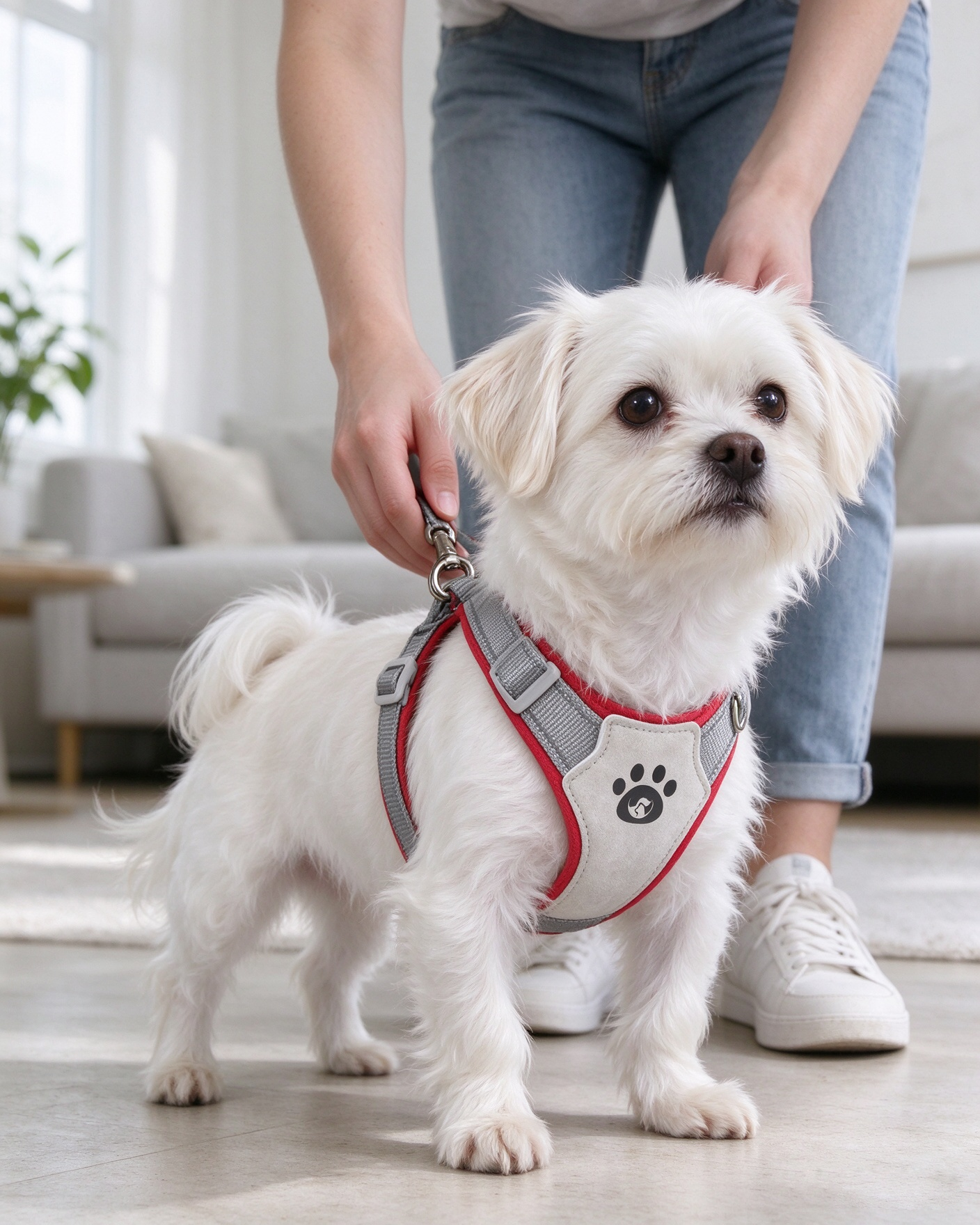
As our dogs get older, their needs change. The long, energetic hikes of their youth might be replaced by slower, shorter strolls around the block. If your senior dog has arthritis or joint pain, even a short walk can be difficult.
But exercise is still important—it helps keep their joints lubricated and muscles strong. Here is how to keep your senior dog comfortable on walks.
1. Switch to a Chest Harness (No More Neck Pressure)
This is the most important change you can make for a senior dog. Collars put pressure directly on the trachea and neck, which can exacerbate arthritis in the neck and spine.
Instead, use a harness that distributes weight across the chest. Our Step-In No-Pull Harness is ideal because it is padded and breathable. The D-ring on the back allows you to attach a leash, and it doesn't restrict their shoulder movement, which is crucial for dogs with arthritis.
2. Shorten the Walks, Increase the Frequency
Arthritic joints tend to "stiffen up" after long periods of rest, but they also get sore after too much exercise. Instead of one long walk, try 3 or 4 short walks (10-15 minutes each) throughout the day.
3. Watch the Weather
Cold and damp weather makes arthritis worse. If it's raining or freezing outside, keep the walk very short. Conversely, hot pavement can hurt their sensitive paws—always test the ground with your hand before walking.
4. Let Them Sniff
Mental exercise is just as tiring as physical exercise. Let your senior dog stop and sniff as much as they want. Sniffing lowers their heart rate and provides mental stimulation without putting stress on their joints.
5. Help Them Up Stairs
Stairs are the enemy of arthritic dogs. If you live in an apartment building without an elevator, consider using a sling or a harness with a handle to support their back end as they climb.
Quality of Life Matters
Just because your dog is slowing down doesn't mean they don't enjoy their walks. By using gentle gear like a step-in harness and adjusting the pace, you can keep their tail wagging for years to come.